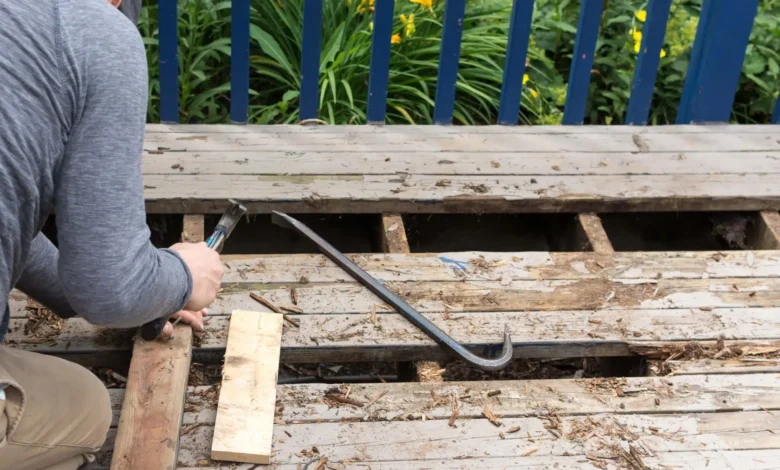
Repair or resurface a deck only when the underlying structure is suitable for continued use; replacement may be needed when important structural components are damaged, unstable, or no longer fit the intended use. A professional inspection should cover the framing, connections, surface, stairs, and railings before work is selected. New boards cannot make an unsafe structure safe.
Look below the visible surface
Deck boards may fade, split, or wear while framing remains serviceable, but surface appearance alone does not establish structural condition. A review should consider the support system, ledger connection where present, joists, posts, fasteners, stairs, and guardrails. Rot, movement, loose connections, or a history of water intrusion deserve prompt professional attention.
Avoid relying on a photo or a quick look from the yard to decide whether a deck is safe. Some important connections are hidden, and damage may appear in more than one place. Do not load or use an area that seems unstable; ask a qualified professional to assess it.
| Observed condition | Possible planning direction | What must be checked |
| Worn finish, structure appears sound | Cleaning, refinishing, or surface replacement may be considered | Board condition, fastening, product compatibility |
| Several loose or damaged boards | Repair or resurfacing scope may be appropriate | Whether the underlying framing is affected |
| Soft, decayed, or moving areas | Stop and obtain a professional review | Extent and cause of damage |
| Stairs or railings feel loose | Treat as a safety concern | Connections, dimensions, and required configuration |
| Layout no longer works | Remodel or rebuild may be considered | Structure, access, drainage, and new use |
This table is a planning aid, not a diagnosis. The actual recommendation depends on an on-site assessment and applicable requirements.
Decide how the deck should function
A remodel is a chance to improve more than appearance. Consider whether the deck needs a clearer path from the door, space for a dining table, a quieter seating zone, or easier access to the yard. Mark door swings, stairs, furniture, planters, and circulation so that the design does not block the most useful route.
If the deck connects to a patio or fence, consider the whole transition. Differences in height, material, or gate placement can affect how the yard works. Ask whether the proposed layout changes affect water movement or access to maintain the home’s exterior.
Compare surface materials and upkeep
Wood and manufactured decking products differ in appearance, maintenance, installation, and repair. Compare product instructions, color choices, fastening systems, and how the surface may weather in the home’s exposure. Ask how replacement boards will match existing material if the project is limited to a repair.
Request a written scope separating structural work from finish choices. It should identify what will be removed, what will be inspected after removal, how unexpected damage is handled, and which railing, stair, or trim details are included.
Homeowners planning a repair, resurfacing, or new layout can review Intra Flooring’s deck remodeling and construction services. Discuss the intended use and any safety concerns before comparing surface finishes.
Ask how the deck will shed water and be maintained
Water exposure affects the deck’s surface and the components where it connects to the home. Ask the contractor to review drainage, the condition of the ledger area where applicable, and whether the proposed surface system is appropriate for the existing structure. If the old surface is removed, clarify whether the framing will be inspected before new boards are installed and how any additional work will be approved.
Maintenance should be part of the material comparison. Ask about cleaning, finish renewal, debris between boards, and how replacement components can be sourced later. Consider whether furniture, planters, or a grill will sit on the deck and whether the layout leaves access for routine care. A good plan accounts for how the deck will be used after construction, not only how it looks on completion day.
Common questions
Can a deck be resurfaced without replacing the frame?
Sometimes, if an inspection finds the structure sound and compatible with the new surface system. Confirm the frame, fasteners, stairs, and railings before approving resurfacing.
How do I know if my deck is unsafe?
Movement, soft areas, decay, loose stairs or railings, and damaged connections are warning signs that require professional assessment. Do not rely on an image or cosmetic inspection alone.
Is composite decking maintenance-free?
No deck product is maintenance-free. Follow the manufacturer’s cleaning and care instructions and ask how the chosen product behaves in the home’s conditions.
What should a deck replacement quote include?
It should describe demolition, structural scope, surface product, stairs, railings, finish details, disposal, exclusions, and how concealed conditions are addressed.
The practical takeaway
Choose the deck project only after the structure has been evaluated. A surface refresh can be appropriate when the frame is sound; structural damage or a change in use may call for a broader remodel. Clear inspection findings and a written scope make the decision easier to understand.


