Browse through Botty user reviews and you’ll notice something consistent: most of them focus on outcomes — “I made X percent” or “the bot showed a loss and I panicked”, but very few explain why the bot behaved a certain way. This gap between experience and understanding is at the root of most negative reviews, most premature bot shutdowns, and most misread results. Understanding the strategy behind Botty doesn’t just satisfy curiosity, it fundamentally changes how you interpret what you see on screen.
This article covers both sides: what users actually report experiencing, and what’s happening under the hood when those experiences occur.
What Users Notice First — and Why It Confuses Them
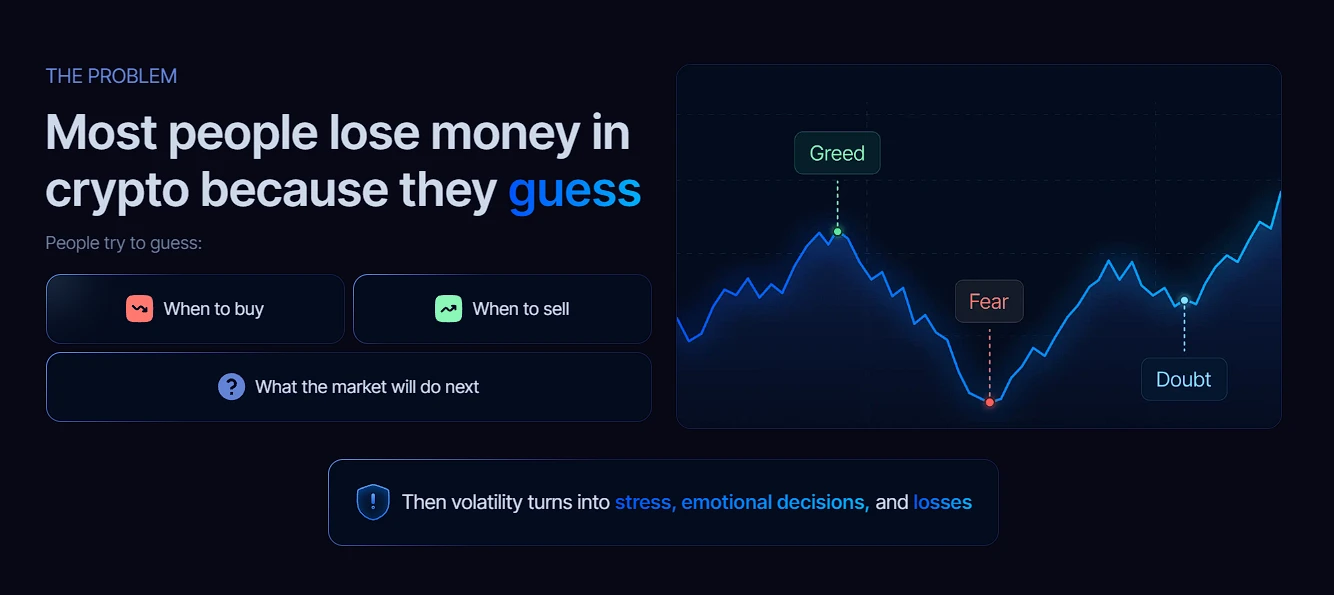
The most common pattern in early Botty user reviews goes something like this: the bot launches, starts opening orders almost immediately, and the user feels a sense of progress. Then the price dips. More orders appear. The unrealized P&L, the running profit/loss figure on screen, turns negative. At this point, a significant portion of new users report the same reaction: alarm.
What most of them didn’t know going in is that this is not a malfunction. It’s the first phase of the strategy working exactly as designed. The bot is accumulating a position across multiple price levels, deliberately buying more as the price falls. The negative figure on screen isn’t a loss, it’s an open position waiting for a price recovery. The moment that recovery arrives, the bot closes the full series of orders at a profit.
In reviews from users who stuck with the bot through this phase, the tone shifts dramatically: they describe the moment the series closes and the realized P&L turns positive as one of the clearest demonstrations of how the algorithm is supposed to work. Those who closed the bot during the accumulation phase, locking in the unrealized loss as a real one, almost universally describe it as their biggest mistake.

The Grid Strategy: What It Is in Plain Language
Botty uses a grid trading strategy combined with position averaging. Here’s what that means without the technical jargon.
A standard grid strategy places a series of buy orders at different price levels below the current market price, and sell orders above it. When the price moves down and hits a buy order, the bot acquires a portion of the asset. When the price recovers and hits a sell order, it closes the position at a profit. The grid essentially turns price oscillation, the constant up-and-down movement of any asset, into a series of small, repeatable profit-generating cycles.
Botty takes this base concept and adds averaging. Rather than placing equal-sized orders at evenly spaced intervals, it places a series of progressively sized orders at levels that account for the realistic probability of different price moves. When the price falls and the bot buys at multiple levels, the average purchase price of the entire position decreases. This means the price doesn’t have to return all the way to the original entry point to generate a profit, it only needs to recover to the new, lower average entry. That’s the averaging component, and it’s what makes the strategy viable in volatile markets where prices don’t simply bounce back to where they started.

Logarithmic Distribution: Why Order Spacing Isn’t Random
One detail that appears in more technically-minded Botty reviews is the mention of logarithmic order distribution. It sounds complex, but the practical meaning is straightforward.
In a simple grid, orders are placed at equal price intervals: every $500 apart, for example. The problem with equal spacing is that it doesn’t reflect how markets actually move. A $500 drop in Bitcoin when it’s at $100,000 is a 0.5% move, almost noise. The same $500 drop when Bitcoin is at $50,000 is a 1% move, noticeably larger. Equal dollar spacing treats these situations as equivalent when they aren’t.
Logarithmic spacing places orders at equal percentage intervals instead of equal dollar intervals. This means the grid automatically adjusts to the scale of the asset’s price, spacing widens as the price rises, narrows as it falls. The result is that the bot’s order placement reflects actual market proportions rather than arbitrary fixed distances. From a user perspective, this means the bot accumulates positions at levels that are meaningfully different from each other, not just mechanically spaced by the same dollar amount regardless of context.
In practice, users who’ve paid attention to where their orders are placed often note in reviews that the spacing feels “natural” relative to the asset’s price movement, which is exactly the intention.
The 0.8% Target Per Cycle: Where It Comes From
A figure that appears across Botty’s materials and frequently comes up in user discussions is the approximately 0.8% profit target per closed cycle. Understanding what this means, and what it doesn’t mean, helps set realistic expectations.
The 0.8% refers to the profit generated per completed series of orders as a percentage of the capital deployed in that series. It’s not the monthly return, it’s not the annual return, and it’s not a guaranteed figure, it’s the target profit from one full accumulation-and-close cycle.
What makes this number meaningful is how it compounds. In an active, volatile market, the bot can close dozens of these cycles in a single month. Each one generates approximately 0.8% on the deployed capital. Stack enough of them together and the monthly figure becomes material. In a quiet, sideways market with fewer price swings, fewer cycles close and the total monthly figure is lower. This is why active, volatile months consistently produce better results in user reviews, not because the bot is “working harder,” but because the market is providing more opportunities for the same process to repeat.
Users who enter with an expectation of “roughly 0.8% per month” are likely to be disappointed in active markets (which deliver more) and confused in quiet ones (which deliver less). The correct mental model is: 0.8% per completed cycle, and the number of cycles per month varies with market conditions.

Bull Market: What Users Report
In a rising market, user reviews of Botty tend to be positive, but the reasons aren’t always what people expect. A steadily climbing price with no pullbacks is actually not the ideal environment for this strategy. If the asset price goes straight up without any dips, the bot has fewer opportunities to accumulate at lower levels and close series at a profit.
What produces the best results in user reviews from bull market periods is the characteristic pattern of bull markets: two steps forward, one step back. The regular corrections within an overall upward trend give the bot repeated opportunities to buy on dips and close on recoveries. This “sawtooth” price action is close to ideal for the grid-plus-averaging approach.
The risk that appears in bull market reviews is a timing issue: users who run bullish templates and don’t adjust when the trend reverses find that the bot continues accumulating into a falling market that no longer bounces. This isn’t a strategy failure, it’s a user decision failure. The bot does what it’s designed to do; the user’s responsibility is to match the template to the market environment.

Bear Market: The Most Revealing Test
Bear market reviews of Botty are the most instructive, partly because they reveal the limits of any strategy, and partly because they highlight the importance of template selection and capital management.
In a sustained downtrend without meaningful recoveries, a spot bot accumulates a growing position in an asset that keeps falling. The unrealized loss grows. The bot is doing its job, accumulating at lower prices in anticipation of a recovery, but if the recovery doesn’t come during the bot’s active period, the position stays open at a loss.
This is where the all-season template becomes relevant. Unlike bullish or bearish-specific templates, the all-season version is designed to be functional across market phases. It trades narrower ranges, accepts lower potential upside in favorable conditions, but maintains stability in unfavorable ones. Reviews from users who chose all-season templates during market downturns consistently show a different emotional profile than those who ran directional templates: less anxiety, more patience, fewer impulsive interventions.
Futures templates in bear markets carry additional risk: the possibility of liquidation if the price drops past the bot’s liquidation buffer without recovery. This is why the platform’s requirement to hold 50% of the allocated budget as reserve capital matters most during bear market conditions, the reserve is the buffer that keeps the bot operational through deep drawdowns.

Sideways Market: The Quiet Months
Sideways market reviews are the most polarized. Users who understood what to expect describe these periods as “the bot doing its job quietly.” Users who expected consistent monthly gains regardless of market conditions describe the same period as “not working.”
In a sideways market, where price oscillates within a range without trending decisively in either direction, the bot still opens and closes cycles, but at a lower frequency than in volatile trending markets. The monthly total is lower. This is correct behavior for the strategy, not a malfunction.
An important perspective from experienced users in reviews: during sideways markets, most manual traders also underperform. The difference is that manual traders often make active losing trades trying to find momentum that isn’t there. The bot simply waits, takes what the market offers, and doesn’t make impulsive decisions out of boredom or frustration. In that sense, the “quiet” months are one of the clearest demonstrations of the emotional discipline the automation is supposed to provide.
October 2025: The Stress Test That Users Still Reference
One event comes up repeatedly in Botty user reviews and discussions as a reference point: October 10, 2025. That day, the crypto market experienced one of its sharpest single-day drops in recent memory — $20 billion in positions were liquidated, 1.3 million traders lost their positions.
Botty’s bots running on BTC, ETH, and SOL that day generated a combined profit of $23,896. The mechanism was straightforward: as Bitcoin fell from $120,000 to $102,000, the bots accumulated large positions at progressively lower levels. When the market partially recovered, those positions closed at a profit. The same event that wiped out 1.3 million positions generated positive returns for users whose bots were running with adequate reserve capital.
This event appears in reviews not as a marketing claim but as a reference point for the strategy’s behavior in exactly the conditions it’s designed to handle: sharp drops followed by partial recovery. Users who had bots running that day often cite it as the moment the strategy “clicked” for them, seeing the accumulation-and-recovery cycle play out in real time on an extreme scale made the mechanics concrete in a way that no explanation could.

What Understanding the Strategy Changes
The pattern across Botty user reviews is clear: the most negative reviews come from users who didn’t understand the strategy before launching. The negative unrealized P&L scared them. The quiet months frustrated them. The accumulation phase during a dip looked like a loss rather than a setup.
Users who understood the mechanics going in, or who learned them quickly during the first weeks, show a fundamentally different experience in their reviews. They watch the bot accumulate during dips with patience rather than alarm. They interpret a quiet month as the market being quiet, not the bot being broken. They distinguish between the realized P&L that matters and the unrealized P&L that is simply the current state of open positions.
This is why Botty’s onboarding requires users to engage with educational materials before launching their first bot. It’s not bureaucratic friction, it’s the platform’s recognition that the gap between what users expect and what the strategy delivers is the most common source of poor outcomes. Not poor algorithmic outcomes, but poor user decisions made on the basis of misreading correct algorithm behavior.
The Non-Custodial Layer: What Reviews Don’t Always Mention
One aspect of Botty’s design that user reviews occasionally mention but rarely focus on is the non-custodial architecture. All funds remain on the user’s exchange account. The platform connects via API key with trade-only permissions, no withdrawal access. This means the platform cannot access user funds under any circumstances.
In a market where multiple platforms have failed and taken user funds with them, this architectural choice is significant. It doesn’t eliminate market risk, but it eliminates a category of platform risk that has historically caused substantial losses for crypto traders. Users who come from platforms where funds were held in custody often note this as one of the most important differences in their Botty reviews.

Performance Fee Model: Aligned Incentives
The fee structure — 5% to 20% of realized profits only, with no monthly subscription, creates a direct alignment between what the platform earns and what the user earns. If the bot generates no profit, Botty earns nothing. This stands in contrast to subscription-based competitors that collect fees regardless of trading results.
Users in reviews frequently cite this model as one of the reasons they trust the platform’s commitment to algorithmic quality. A platform earning only from profits has every incentive to ensure those profits are real and consistent. A platform earning from subscriptions has no such direct incentive.
Final Take: The Strategy Is the Product
Reading through Botty user reviews with the strategy in mind, a clear picture emerges: the bot works as described for users who understand what it’s doing. It underperforms expectations, not results, for users who expected something different.
The grid-plus-averaging strategy is not a system that produces profit in every market condition on a fixed schedule. It is a system designed to profit from price oscillation, to buy into weakness and close into recovery, repeatedly, at small margins that accumulate into meaningful returns over time. When that oscillation exists, the strategy performs. When it doesn’t, the bot waits.
For traders willing to work within that framework, with realistic expectations, adequate reserve capital, and the patience to distinguish between unrealized positions and actual losses, the mechanics support what the user reviews of Botty describe: a functional, transparent, and emotionally sustainable approach to participating in crypto markets without the need for constant manual involvement.
Cryptocurrency trading involves significant risk. Past performance data does not guarantee similar results in the future. Potential returns depend on market conditions, selected settings, and capital management.